Understanding Rowing Terminology

Modified on Thu, 4 Jun at 9:28 AM

Understanding Rowing Terminology


Many workouts inside Crew 2.0 use rowing-specific terminology. Understanding these terms can help you better follow workouts, manage pacing, and improve your rowing performance.


Damper Setting

The lever on the side of a Concept2 flywheel that controls airflow resistance. It changes how the stroke feels but does not directly make you faster.


Drag Factor

A measurement of how much resistance the flywheel creates. This is more accurate than simply using the damper number.


Steady State

Longer rowing at a controlled and sustainable pace designed to build endurance and aerobic fitness.


Power Stroke

A stroke performed with higher force and intensity to generate more power.


Pick Drill

A technique drill that breaks the rowing stroke into smaller sections to improve sequencing and body control.


Rate Cap

A workout instruction limiting the maximum stroke rate you can row during a piece.

Example:

  • Rate cap 24 = Do not row above 24 SPM.


Sprint Piece

A short, high-intensity rowing effort focused on speed and power.


Erg / Ergometer

Another term for an indoor rowing machine.


Flywheel

The spinning wheel inside the rowing machine that creates resistance.


PR (Personal Record)

Your best performance for a specific workout or distance.


Anaerobic Threshold

The exercise intensity where the body begins producing fatigue faster than it can recover.


Steady Pace

A controlled pace maintained consistently throughout a workout.


Power Curve

A graph on the rowing monitor showing how power is applied during each stroke.


Split Average

Your average pace per 500 meters over an entire workout or interval.


Paddle

Very light rowing used for recovery or warming up.


Technique Piece

A workout focused more on rowing form and movement quality than speed or intensity.


Pyramid Workout

A workout where distances or times gradually increase and then decrease.

Example:

  • 250m → 500m → 750m → 500m → 250m


Ladder Workout

A workout where intervals progressively increase or decrease in distance or time.


Max Effort

An all-out effort performed at your highest possible intensity.


Recovery Paddle

Light rowing done between harder intervals to recover while still moving.


Warm-Up Piece

Easy rowing performed before the main workout to prepare the body.


Cool-Down Piece

Light rowing performed after training to gradually lower heart rate and aid recovery.


Power Per Stroke

The amount of force generated during each rowing stroke.


Head Race

A longer rowing race focused on endurance rather than sprint speed.


Race Pace

The pace you aim to maintain during a race or test piece.


Stroke Ratio

The relationship between drive speed and recovery speed during the rowing stroke.


Test Piece

A workout specifically designed to measure fitness or performance progress.


Erg Score

A recorded rowing performance result, often used for rankings or progress tracking.


Monitor / PM5

The display screen on a Concept2 rowing machine that shows pace, distance, stroke rate, and workout data.


Stroke Length

The total distance covered during one rowing stroke from catch to finish.


Layback

The slight backward lean of the body at the finish of the stroke.


Connection

The feeling of applying force smoothly and effectively to the rowing machine.


Pressure

The amount of force or intensity applied during the rowing stroke.

Stroke Per Minute (SPM)

SPM stands for Strokes Per Minute and is one of the most commonly used terms in rowing, both on the water and on the indoor rower.

SPM measures the total number of strokes taken within one minute.

For example:

  • If you take 1 stroke every 3 seconds, your SPM would be:
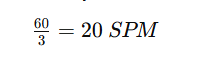
SPM is often associated with rowing “tempo” or rhythm.


Pace

Your pace in rowing is expressed as the amount of time it takes to row 500 meters.
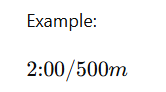

This is usually the largest number displayed on your rowing console.


Drill

A drill is a focused exercise used to improve a specific part of your rowing technique.

Drills help rowers:

  • Slow movements down
  • Improve body positioning
  • Correct weaknesses in the stroke
  • Build better movement patterns

Inside The Crew, members have access to a dedicated Drill Library designed to help improve rowing technique and efficiency.

Dark Horse Rowing Drill Library


Build

A “build” workout asks you to gradually increase your effort over a designated distance or interval.

Example

4 x 800m starting @ 2:00 split, build to full speed

This means each 800m interval should gradually become faster throughout the piece.

Example effort progression:

  • First 200m → 75% effort
  • Second 200m → 80% effort
  • Third 200m → 85% effort
  • Final 200m → 90%+ effort

The goal is controlled acceleration while maintaining strong technique.


Negative Split / Descend

A negative split or descend workout means getting faster across multiple repetitions or intervals.

Example

4 × 1000m @ 1:30 rest — Descend 1–4

This means:

  • Interval 2 should be faster than Interval 1
  • Interval 3 faster than Interval 2
  • Interval 4 is your fastest effort

Unlike a build, which increases speed within a single interval, descending increases speed across several intervals.


ROLF (Rowing Golf)

ROLF stands for Rowing Golf.

Like traditional golf, the goal is to achieve the lowest possible score.

Your ROLF score is calculated by adding:

  • Your rowing time
  • Your total stroke count

Example

If your time is:

1:40

And your stroke count is:

30

Your ROLF score would be:

100+30=130

Lower scores indicate greater efficiency.


Metcon 

Short for Metabolic Conditioning.

It is a high-intensity training style designed to improve your body's ability to produce and use energy efficiently. In rowing workouts, Metcon sessions often combine periods of hard work and recovery to challenge both your cardiovascular system and muscular endurance.


Still Need Help?

If you have questions about rowing terminology, pacing, or workout instructions, please contact us at support@darkhorserowing.com and our team will be happy to assist you.


Was this article helpful?

That’s Great!

Thank you for your feedback

Sorry! We couldn't be helpful

Thank you for your feedback

Let us know how can we improve this article!

Select at least one of the reasons
CAPTCHA verification is required.

Feedback sent

We appreciate your effort and will try to fix the article